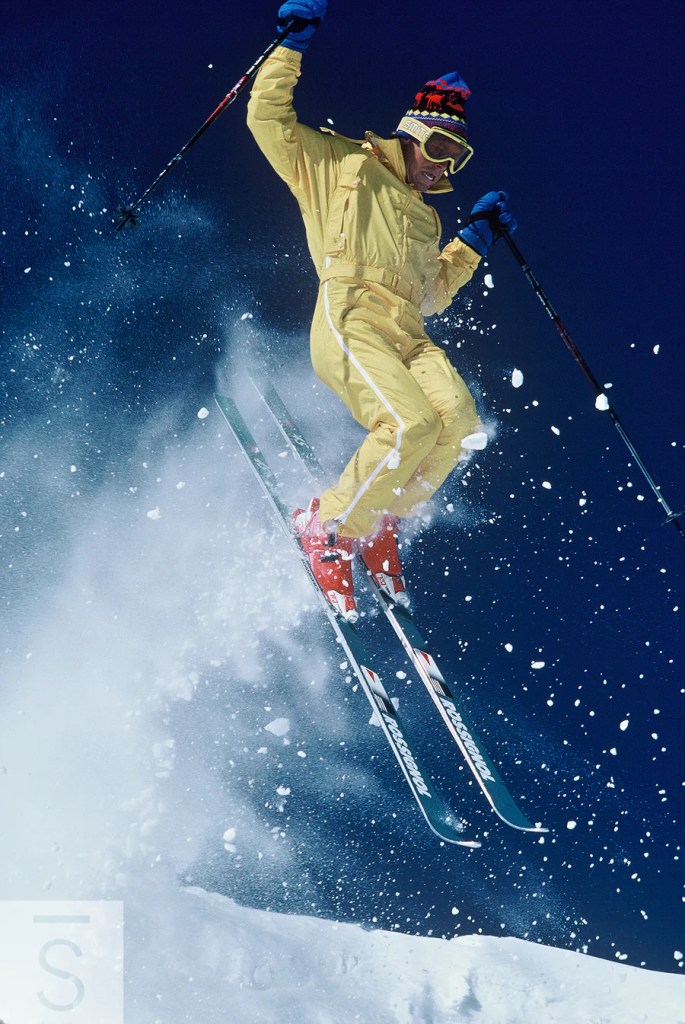
“I want a personal trainer, three times a week,” I announced to my Huntsman Cancer Institute doctor in Salt Lake City. It was the middle of July with only five months between this stupid breast cancer journey and ski season. Surgery, chemotherapy and radiation had the potential to wipe me out, and I wasn’t about to let that happen.
I had always been active in the summer with hiking, rock climbing, kayaking and lifting weights. It was always “just enough” and never focused. This time, not only did I have a positive goal to fixate on, but I could prevent stepping from one hospital into another by making sure I was stronger than ever despite circumstances that wanted to ravage me.
That decision marked the start of a completely different approach to ski conditioning in the off-season — one centered not on just preventing injury or being able to ski top to bottom without a leg burn, but one that carried me into and beyond the winter. A program that could keep me healthy as well as strong. I had hit rock bottom so to speak, and it was time to stop cramming fitness into the six weeks before opening day.
Living your best life, injury-free
Park City trainer Ben Van Treese created the 100-Year Athlete program precisely because he was seeing too many athletes deteriorate in their 40s. “People are confused; they think they are doing everything right but they still get hurt and injured,” he explains. “They’re trying to do the things they love but training in a way that’s unsustainable or missing components like joint development, losing speed and power [as a result].” The goal of his program, which can be done online or at Minerstown Strength and Conditioning, is for athletes to enjoy the sports and activities we love for a whole lifetime.

“We just have to approach taking care of our bodies in an intelligent way,” Van Treese says. Traditional gym culture often trades health for performance. Look around at your friends who train casually. They often stay pain-free and play forever, while those hardcore athletes break down.
The fix? Prioritize health first: healthy joints, tissue, stress management and nutrition. Then layer on a six- to eight-week performance block before your season starts. Once it does, return to foundational health work. His program uses “periodization” perfectly suited to mountain life where we have two sports seasons (summer and winter) and two shoulder seasons (spring and fall). In the shoulder seasons, he runs eight-week camps to prep the body for whatever comes next. In season, you train while skiing to stay healthy on the hill.
“The goal of skiing is to keep doing it,” Van Treese emphasizes. “But the easiest way to ruin a sport for yourself is to get that career-ending injury. The healthier and more athletic you are, the better able you are to bounce, not break, when things go south.”
That philosophy was what carried me through my cancer treatment. My sessions weren’t about working so hard I could barely move or smashing personal bests; they were about learning what to do to make my joints work better and then layering strength and power on top of that. Consistency over intensity became my mantra.

Building a body that lasts
Ashley Battersby’s journey from competitive slopestyle skier to personal coach mirrors that belief. Her biggest turning point wasn’t a podium finish; it was the surgical table after repeated knee injuries. “I wasn’t getting hurt because I wasn’t tough enough,” she says. “I was getting hurt because I wasn’t physically resilient enough for the forces I was putting my body through. That’s when conditioning stopped being aesthetic or performance-only. It became protective.”
Her eureka moment came after one dedicated off-season of structured progressive strength training. On her first day back on snow, her legs didn’t burn, she absorbed landings cleanly, and she wasn’t scared of her knees. “That confidence was new,” Battersby recalls. “It wasn’t just that I was stronger, I trusted my body. Most recreational skiers don’t need more ski days, they need better preparation.”
Out of that pain came her Shred Stronger, For Longer program built on principles Battersby wished she’d followed in her early 20s: strength first, then power; stability before chaos; and mobility as a performance enhancer, not an afterthought. “Fatigue plus instability equals re-injury,” she shares.
Her program incorporates timed stations and “stick the landing” challenges because skiing demands precision under fatigue. Yet, Battersby also champions the power of boring, efficient work. “Just because it may feel boring, remember that boring can be efficient and effective,” she says.
If she could, Battersby would tell her younger self that strength training wasn’t going to make her bulky; it was going to protect her career. “Longevity matters more than proving something in one workout,” she says. “People treat skiing like it only requires preparation a few weeks before the season, but your nervous system and joints don’t adapt that fast. Strength training has to be a lifestyle, not a seasonal panic plan.”
In other words, if you want to keep skiing, hiking, biking and doing the other sports you love, your body needs ongoing strength, not just a short burst of preparation. Gerrit Garberich, senior sports manager and head biathlon coach at the Utah Olympic Legacy Foundation’s Soldier Hollow Nordic Center, nods in agreement while discussing his summer roller-skiing program for cross-country skiers. Roller skiing features short skis with wheels on their ends and are used on streets and paths to emulate cross-country skiing. Once you push past the “Bambi on ice” phase, you can train specific ski muscles and improve ski technique and efficiency for when you’re back on snow.

“Roller skiing through the summer preserves the conditioning you gained over last winter. You won’t be starting from zero again when next winter rolls around,” Gerrit explains.
For noncompetitive skiers like me, Gerrit and the others say two to three days a week for training is plenty to maintain ski fitness. “Even one day a week goes a long way,” says Gerrit. He recommends supplementing any endurance sport with full-body strength training and mobility work. “Move your body in as many different ways as possible.”
Hit the gym a couple of times per week, run or hike, bike or climb, swim or play pickleball — whatever gets you out the door. The variety of play in Park City can be overwhelming but gloriously entertaining if you can just see summer and fall as something more than a “rest day” for winter. Have your picnics and concerts in the park but also keep those joints and muscles fired up.

What started as a five-month, three trainer sessions a week program became my nonnegotiable foundation for the future. We focused on joint health and unilateral stability so my knees and hips could handle the forces of skiing without breaking down. We built strength before adding power and rotating in some core work. We built in cardio and heart health, knowing that the chemo drugs would cause fatigue. We kept the one-hour sessions relatively short but engaging and progressive, never redlining a workout.
I left every session feeling physically fit rather than just exhausted. Five months later, I stepped into my boots a stronger, more confident athlete. I was ready not just for one great season, but for many more down the line. Cancer tried to suck out my life; instead, it forced me to build it smarter and more purposefully than ever.
It’s the same message you’ll get from any number of trainers and programs in Park City. There’s no reason we can’t stack the deck for more mobile, athletic, vibrant decades ahead, so your 70s, 80s and 90s are the best yet. Train not to impress, but to keep doing what you love.
P.S. I’ve been cancer free and skiing hard since 2009.