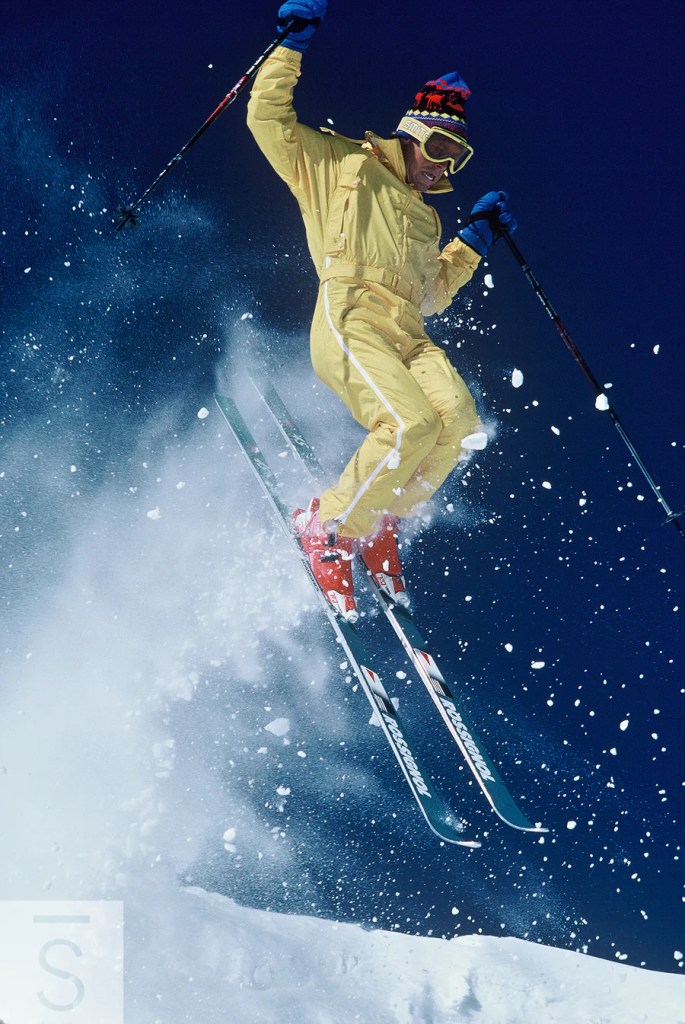
Park City, affectionately referred to as “Sin City,” is known to be a little wilder than the rest of the Beehive State. The town’s lively culture and carefree attitude can be traced all the way back to its founding days in 1869.
“Park City has always had an independent spirit in the state of Utah, especially when it relates to actual spirits (alcohol),” notes Dalton Gackle, research, digital services and social media coordinator for Park City Museum.
Unlike most towns in Utah, Park City was not settled by members of The Church of Jesus Christ of Latter-day Saints. “It was actually established as a mining community by Colonel Patrick Connor,” says Erik “Hutch” Hutchins of Park City Ghost Tours. “The colonel wanted to entice non-Mormons into the Utah territory, and what’s better than offering someone the chance to be wealthy?”
Not surprisingly, the promise of striking it rich brought many hopeful settlers to the area, and soon Park City was a thriving town. Gackle says, “During our mining days, people of all backgrounds and from all across the world were arriving here to try and make a living or make it rich. Park City was its own little melting pot.”
By the late 1800s, the community had reached a population of more than 5,000 and had a post office, public school and newspaper. The city was also one of the first in the state to install telephone service and electric lights.
Amidst all this prosperity, Park City was bustling with boarding houses, shops and a fair number of saloons. “Most of the people arriving were coming from cultures where drinking alcohol was part of their lifestyle and values,” explains Gackle. These diverse customs didn’t always mesh with the nearby settlements, as the doctrine of The Church of Jesus Christ of Latter-day Saints forbade the consumption of alcohol and tobacco. Park City was looked upon by many as a sinful place and was shunned by many within the Mormon territory.
However, despite its naughty reputation, the town continued to thrive and increase in popularity. As Hutchins explains, “Prospectors from northern Europe brought their knowledge and skills to work the mines. However, they also brought their love of drinking, their love for gambling and their love for women. Park City became the biggest party town between St. Louis and San Francisco.” He says, “Park City was the original Vegas. What happened in Park City, stayed in Park City!”

Park City’s prosperity and partying attracted some rather unseemly rascals and scoundrels. Local townsfolk and law enforcement did their best to maintain the peace and keep the town respectable. And while most of the criminal infractions were minor in nature — drunkenness, disturbing the peace, fighting, prostitution — Park City did have its share of professional criminals.
In 1885, an official jail was built in the middle of Main Street; today, you can visit the original structure in the basement of Park City Museum. The facility was described as dreadful — think dank, dark, cold and no running water or electricity. It wasn’t until 1906 that a concrete floor and toilet were added. As the Park Record reported, it is finally “fit for human beings to live in.”
While it is true that the majority of the town’s troublemakers committed only minor infractions, Park City was known for its outlaws and bandits. Black Jack Murphy became one of the most infamous outlaws after killing a fellow prospector and trying to steal his mining claim. Murphy was lynched on a Park City telegraph pole in 1883 for all to see.
Kid Parker, a professional gambler and thief, held up 25 men in The Oak Saloon and got away with more than $600 in 1910, which is equivalent to about $20,000 today. Patrick (Patsy) Coughlin was chased down by a posse after stealing a box of strawberries and two horses. Two deputies were shot during the gunfight that ensued and consequently, Coughlin was sentenced to death and executed by a firing squad in 1895.
While there were always criminals passing through the streets of Park City, it could be argued that the most unlawful period in the town’s history was during Prohibition. From 1917, when Utah officially outlawed alcohol, until 1933, when the 18th Amendment was repealed, bootlegging (the illegal production, transportation and sale of alcohol) was a crime that seemed to be happening all over Summit County.
Among these were town folks like Alex Hamlin, a family man and city barber. During Prohibition, the entrepreneur expanded his business to include the sale of a locally made concoction called “white mule.” The white liquid was reported to contain quite a kick and became very popular amongst miners. In September 1920, Hamlin was pulled over in a brand-new vehicle with three gallons of white mule in the trunk. The vehicle was impounded, and he was fined $600. The penalty didn’t deter the lawbreaking barber, and Hamlin continued his bootlegging until he and his family moved out of the area, probably to evade further prosecution.

However, Gackle notes, “Park City has always had around two dozen establishments serving beer, wine and liquor. Even during Prohibition, our soft drink parlors were often just a cover to keep serving booze.”
The temptations that were around during the time of Prohibition spread from ordinary citizens to the town council and law enforcement. Perhaps the most notorious of these offenders was Deputy Sheriff W.R. Jeffords. This city official extorted local barkeeps and saloon owners by demanding money to avoid raids. Jeffords would even resell the bootleggers’ stills he had previously confiscated. He got away with this scam for years and was taking home about $25,000 annually in bribes, which equates to almost $400,000 in today’s economy. In 1927, Jeffords luck ran out and he was found guilty of extortion and sentenced to 10 months in Summit County Jail.
With Main Street chock-full of speakeasies — illicit establishments that sold alcohol — it’s not surprising that most of the town’s citizens were breaking the law on a weekly, if not daily basis. “It was said that in those days you could start at one end of Main Street and if you stopped at every establishment for a drink, you couldn’t get halfway up the street without falling down drunk,” Hutchins explains. “The reason there were so many places was because many of the miners spoke different languages coming from different countries with differing cultures. However, most of them shared the same religion, Catholicism.”
When visiting Main Street today, many historical structures from these bygone days are still standing, and there is a speakeasy hidden in a retail store, Kemo Sabe. Park City’s notorious past can be witnessed while walking through the streets, and its wild and outlaw spirit can be felt in the air.